
Neuroplasticity: How Experience Rewires the Brain
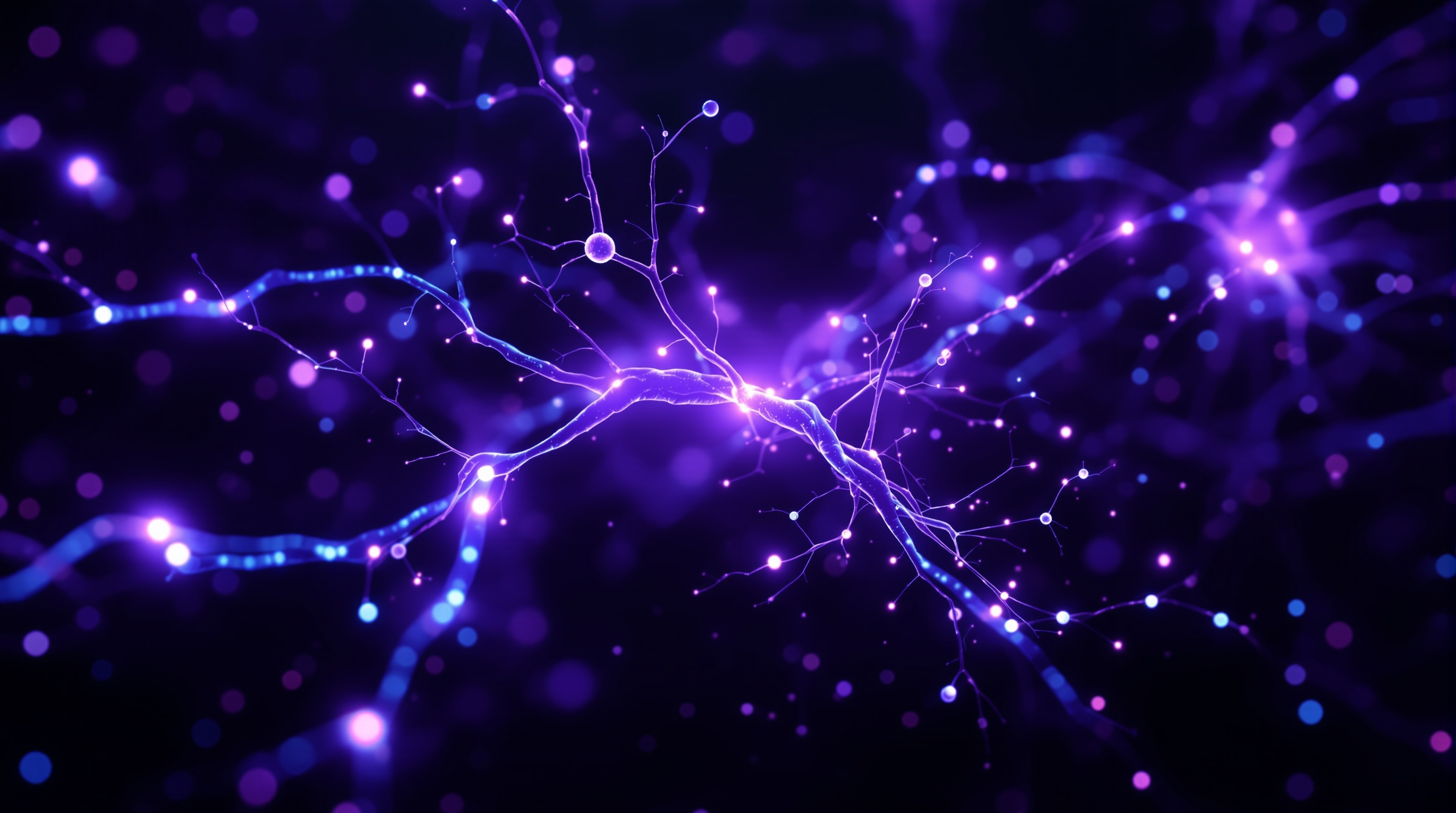
We have watched a single synapse fire. Now watch it fire again, and again — because something remarkable happens to a connection that is used repeatedly: it changes. It grows stronger. The brain, it turns out, is not a finished circuit board with fixed wiring. It is a structure that rebuilds itself continuously in response to what happens to it — synapses strengthening and weakening, new connections sprouting, unused ones quietly pruned away. Every skill you have practiced, every language you have learned, every scar and recovery, is written into the physical architecture of your brain by this one property. The organ that does your remembering is itself remade by what it remembers. That property has a name — neuroplasticity — and it is also one of the most abused words in wellness marketing.
Cells that fire together
The founding idea is nearly eighty years old. In 1949 the psychologist Donald Hebb proposed a rule so simple it now sounds obvious, and so deep it still organizes the field.
When an axon of cell A is near enough to excite a cell B and repeatedly or persistently takes part in firing it, some growth process or metabolic change takes place in one or both cells such that A's efficiency, as one of the cells firing B, is increased. — Donald Hebb, The Organization of Behavior, 1949
In other words: connections that are used together get stronger. You have almost certainly heard the popular compression of this — "cells that fire together wire together" — and it is worth a small, honest correction, because this Journal cares about attribution. That catchy line is not Hebb's; he never wrote it. It was coined much later, popularized by the neuroscientist Carla Shatz around 1992, with the closely related printed phrasing appearing in a 1992 paper by Siegrid Löwel and Wolf Singer.[2] The concept is Hebb's; the slogan is not. Getting even the small credits right is part of the discipline.
The physical face of the rule: LTP
For a long time Hebb's rule was a beautiful hypothesis with no direct evidence. Then, in 1973, Timothy Bliss and Terje Lømo, working in the rabbit hippocampus, delivered a brief burst of high-frequency stimulation to a neural pathway and found that the synapses it drove became lastingly stronger — the same input now produced a bigger response, and stayed that way for hours.[1] They had found long-term potentiation, or LTP: the physical demonstration that a synapse can durably change its strength with use. LTP is now the leading cellular model for how the brain stores experience, and it has a mirror twin — long-term depression (LTD) — that durably weakens synapses. Together they let a circuit both turn connections up and turn them down, strengthening the useful and pruning the rest. Plasticity is not a one-way ratchet toward "more"; it is a sculptor's tool that both adds and removes.
The coincidence detector
How does a synapse "know" that its two neurons fired together? The answer is one of the most elegant pieces of molecular logic in biology, and it lives in a particular ion channel: the NMDA receptor. This receptor is a gate with two locks. To open and let calcium in, it needs both that the presynaptic neuron has released glutamate and that the postsynaptic membrane is already depolarized — because at rest a magnesium ion sits plugging the channel's pore, and only depolarization knocks it loose. So the NMDA receptor is a literal AND-gate: it admits calcium only when "before" and "after" are active at the same time. This is Hebb's rule rendered in atoms — the molecular embodiment of "fire together."
And once calcium floods in through that opened gate, it sets off a signaling cascade that does the actual strengthening: it drives more AMPA receptors — the fast, workhorse glutamate channels — into the postsynaptic membrane, so the same puff of neurotransmitter now produces a larger electrical response. Turn the AMPA count up and the synapse is louder; run the process in reverse and it goes quiet. The "volume knob" of memory is, in large part, the trafficking of receptors in and out of a membrane.
- Step 1 · Repeated co-activation"Before" and "after" fire togetherA presynaptic neuron fires while the postsynaptic neuron is depolarized — again and again. The literal condition Hebb described.
- Step 2 · NMDA coincidence detectionThe molecular AND-gate opensGlutamate is bound AND the membrane is depolarized, so Mg²⁺ leaves the NMDA channel — it opens only when both are true.
- Step 3 · Calcium signalingThe trigger entersCa²⁺ floods through the open NMDA receptor and sets off intracellular cascades (CaMKII and beyond).
- Step 4 · Strengthen + reshapeMore AMPA, bigger spineMore AMPA receptors are inserted and the dendritic spine can enlarge and stabilize — the synapse grows louder and physically bigger.[4]
- Step 5 · The circuit is durably changedRewiring, made permanentLTP and structural change persist (or, via LTD, weaken and prune) — the wiring that carries the memory has itself been remade.
Rewiring, literally
Plasticity is not only a matter of turning synapses up and down; sometimes the anatomy itself moves. Using microscopes that can watch a living mouse brain over days, researchers have seen dendritic spines — the tiny knobs where synapses sit — grow, enlarge, shrink, and disappear.[4] Most spines are stable, the durable backbone of who you are; but a restless minority are constantly appearing and vanishing, and experience shifts the balance. When you practice something, spines on the relevant neurons tend to grow and stabilize; when a skill lapses, they fade. Zoom out further and whole cortical maps reorganize: Michael Merzenich showed that in adult monkeys the patch of cortex representing a heavily used finger physically expands, and that when input from one region is lost, neighboring regions move in to occupy the vacated territory. The map of the body in your brain is not fixed real estate; it is contested ground, redrawn by use.
The ceiling: plasticity is not infinite
Here honesty requires a limit. Plasticity is real but bounded — it does not mean the brain can be reshaped without effort or at any age. The clearest evidence is the critical period. David Hubel and Torsten Wiesel showed that the developing visual cortex can be dramatically reshaped by experience — but only within an early window; deprive one eye of input during that window and its cortical territory is permanently ceded, while the very same deprivation in an adult does far less. For this work on how the visual system is wired they shared the 1981 Nobel Prize in Physiology or Medicine, awarded "for their discoveries concerning information processing in the visual system."[3] The lesson is double-edged: the brain is astonishingly malleable, and that malleability has windows that open and close. Adult plasticity is real, but it is slower, harder-won, and more limited than the developing brain's — and it is driven by activity, by actual experience and effort, not by passive exposure.
Where the honesty lives
All of which makes "neuroplasticity" the most poignant word in the wellness lexicon, because the science is genuinely thrilling and the marketing genuinely misleads. Two honest caveats first. The frontier is real and unsettled: whether the adult human brain grows meaningful numbers of new neurons is actively contested — two careful 2018 studies, using similar methods, reached opposite conclusions, one finding adult hippocampal neurogenesis essentially undetectable and the other finding it persists throughout life.[5] That is what an open question looks like, and it should not be sold as settled either way.
And then the overclaim. Commercial "brain training" has long implied that playing its games will rewire your brain for broad, lasting cognitive gains. The honest finding from the research is deflating: you mostly get better at the specific task you practice, with little transfer to general intelligence or everyday life. In 2016 the U.S. Federal Trade Commission fined the maker of Lumosity $2 million, charging that it had deceptively claimed its games could improve performance at work and school and stave off dementia and Alzheimer's, without the science to back it.[6] Two years earlier, some seventy scientists had signed a consensus statement warning that there was "no compelling scientific evidence" that brain games reduce or reverse cognitive decline. And the deeper point is mechanistic: the rewiring described in this essay requires actual co-activation of neurons — real, effortful experience. There is no route by which a passive gadget or a "frequency" selectively rewires your brain for health, because passivity breaks the very mechanism. Genuine recovery after a stroke is real, and it comes from hard, task-specific rehabilitation — the effortful kind — not from sitting near a device. The word "neuroplasticity" is a magnificent piece of science. It is not a permission slip.
Established: the brain rewires with experience via synaptic plasticity — Hebbian strengthening, long-term potentiation (Bliss & Lømo 1973) and its counterweight long-term depression, the NMDA receptor as a coincidence detector (opens only when glutamate binds AND the membrane is depolarized, expelling Mg²⁺), AMPA-receptor trafficking as the 'volume knob,' and structural change (dendritic spines grow/shrink/prune; cortical maps remap — Merzenich). Critical periods (Hubel & Wiesel, Nobel 1981) show plasticity is real but bounded by developmental windows. Genuine functional recovery after stroke is real and rehab-driven (effortful, task-specific). Note: 'cells that fire together wire together' is NOT Hebb's phrasing (Shatz / Löwel & Singer 1992); the concept is Hebb's (1949). Frontier (genuinely contested): adult human hippocampal neurogenesis — Sorrells et al. 2018 (undetectable) vs Boldrini et al. 2018 (persists); the limits of adult plasticity; plasticity-based therapies still in research. Rejected / overclaimed: commercial 'brain training' as general cognitive enhancement (FTC v. Lumosity, $2M, 2016; ~70 scientists found 'no compelling scientific evidence,' 2014 — benefits are mostly task-specific, little far transfer); any device or 'frequency' that passively 'rewires your brain' to heal — real plasticity requires actual co-activation (experience and effort), so passivity breaks the mechanism. Tesla BioLights makes no medical claims.
Quick answers
What is neuroplasticity?
The brain's capacity to change its structure and function with experience — synapses strengthen and weaken, connections form and prune, spines grow, and cortical maps reorganize. It's driven by activity (real experience and effort), not by passive exposure to a device or signal.
How does the brain rewire itself?
Hebbian plasticity: connections used together strengthen. The NMDA receptor opens only when glutamate is bound AND the cell is depolarized (a coincidence detector); the calcium that enters inserts more AMPA receptors and can enlarge the spine — producing LTP and lasting structural change. LTD runs it in reverse.
What is long-term potentiation?
LTP is a lasting increase in synaptic strength after correlated activity — first shown by Bliss and Lømo (1973) in the hippocampus. It's the leading cellular model for how experience is stored, and the physical face of Hebb's 1949 rule.
Do brain-training games rewire your brain?
Mostly you improve at the trained task, with little transfer to general ability. The FTC fined Lumosity $2M in 2016 for deceptive claims; ~70 scientists found "no compelling scientific evidence" for broad benefits in 2014. Real plasticity is specific and effortful, not a general upgrade.
Can a device rewire my brain to heal me?
No. Rewiring requires actual co-activation of neurons — experience and effort. There's no established route by which passive exposure to a gadget or "frequency" selectively rewires you for health. That's exactly why such a claim is a non-sequitur.
Does Tesla BioLights claim any of this?
No. Zero medical claims. Neuroplasticity is real but specific — precisely why "a device rewires your brain" doesn't follow. Adult neurogenesis is contested; "brain training" benefits are limited. Nothing here validates any product.
Bioelectric Mechanisms · The resting potential · The pump · The channels · The spike · The synapse · The rewiring · Biofield Hub →
Tomorrow on the Journal
Day 64 — Memory: How the Brain Holds the Past. If experience rewires synapses, memory is what that rewiring stores. We follow the trace from a sea slug's reflex to a Nobel Prize, from a man who lost the power to form new memories to the light that can switch a single memory on in a mouse.
References
- Bliss TVP, Lømo T. Long-lasting potentiation of synaptic transmission in the dentate area of the anaesthetized rabbit following stimulation of the perforant path. J Physiol. 1973;232(2):331–356. DOI 10.1113/jphysiol.1973.sp010273. PMID 4727084. The founding demonstration of LTP.
- Hebb DO. The Organization of Behavior. Wiley, 1949. The Hebbian postulate (verbatim above). The slogan "cells that fire together wire together" is a later popularization — Carla Shatz (~1992); related printed phrasing in Löwel S, Singer W. Science. 1992;255(5041):209–212. DOI 10.1126/science.1372754 — not Hebb's own words.
- The Nobel Prize in Physiology or Medicine 1981. One half to Roger Sperry; the other half jointly to David Hubel and Torsten Wiesel, "for their discoveries concerning information processing in the visual system." nobelprize.org. Basis of the ocular-dominance / critical-period work.
- Trachtenberg JT, et al. Long-term in vivo imaging of experience-dependent synaptic plasticity in adult cortex. Nature. 2002;420:788–794. DOI 10.1038/nature01273. And Holtmaat AJ, et al. Transient and persistent dendritic spines in the neocortex in vivo. Neuron. 2005;45(2):279–291. DOI 10.1016/j.neuron.2005.01.003. Structural plasticity: a stable majority, a dynamic minority. Cortical remapping: Merzenich et al. J Comp Neurol 1984, DOI 10.1002/cne.902240408.
- Adult neurogenesis — contested. Sorrells SF, et al. Human hippocampal neurogenesis drops sharply in children to undetectable levels in adults. Nature. 2018;555:377–381. DOI 10.1038/nature25975. PMID 29513649. Versus Boldrini M, et al. Human hippocampal neurogenesis persists throughout aging. Cell Stem Cell. 2018;22(4):589–599. DOI 10.1016/j.stem.2018.03.015. PMID 29625071.
- Lumosity to Pay $2 Million to Settle FTC Deceptive Advertising Charges. U.S. Federal Trade Commission press release, Jan 5, 2016. ftc.gov. Plus the 2014 consensus statement (Stanford Center on Longevity & Max Planck Institute for Human Development): "no compelling scientific evidence" for brain-training claims. Background: StatPearls, Neuroanatomy, Neuroplasticity, NBK557811.